By Ryan O'Hara
Thu, Aug 13 2026
Boxing Is Manufacturing Champions Instead Of Making Them
Wow.
Is it great to see you guys again.
Yes, everyone. It’s me. Ryan O’Hara. I’m back.
Well… sort of.
FightNights.com is undergoing a rebrand, and when the opportunity came to be a part of it again, I knew I couldn’t pass it up. It has been several years since I worked for this site, but I’d be lying if I said I ever forgot what it meant to me.
FightNights was a vital part of the journalist I became.
I’ve been fortunate enough to win awards, cover some of the biggest names and fights in boxing, and build a career that I’m incredibly proud of. But none of that changes where I came from. FightNights.com was part of that journey, and it would be incredibly selfish of me to forget it.
So, yes, I’m back.
And what better way to welcome myself back than with a little rant?
It’s a beautiful August day, and there is something that has been bothering me for quite some time.
Actually, it’s been bothering me for years.
We have reached a point in boxing where fighters are becoming world champions without having to win a fight for the privilege.
Think about that for a second.
In a sport where the entire premise is supposed to be simple — two fighters get into a ring, one wins, one loses — we somehow continue to find ways to hand out championships without anyone actually having to fight for them.
How did we get here?
And, more importantly, how is this helping boxing?
I’ve spent years criticizing the sanctioning bodies across multiple outlets. This isn’t going to be another 5,000-word rant about everything wrong with the WBC, WBA, IBF and WBO.
But as boxing continues to become increasingly difficult for casual fans to follow, I think it’s important that we at least acknowledge one of the biggest problems staring us directly in the face.
We have too many belts, too many champions and, increasingly, not enough fights.
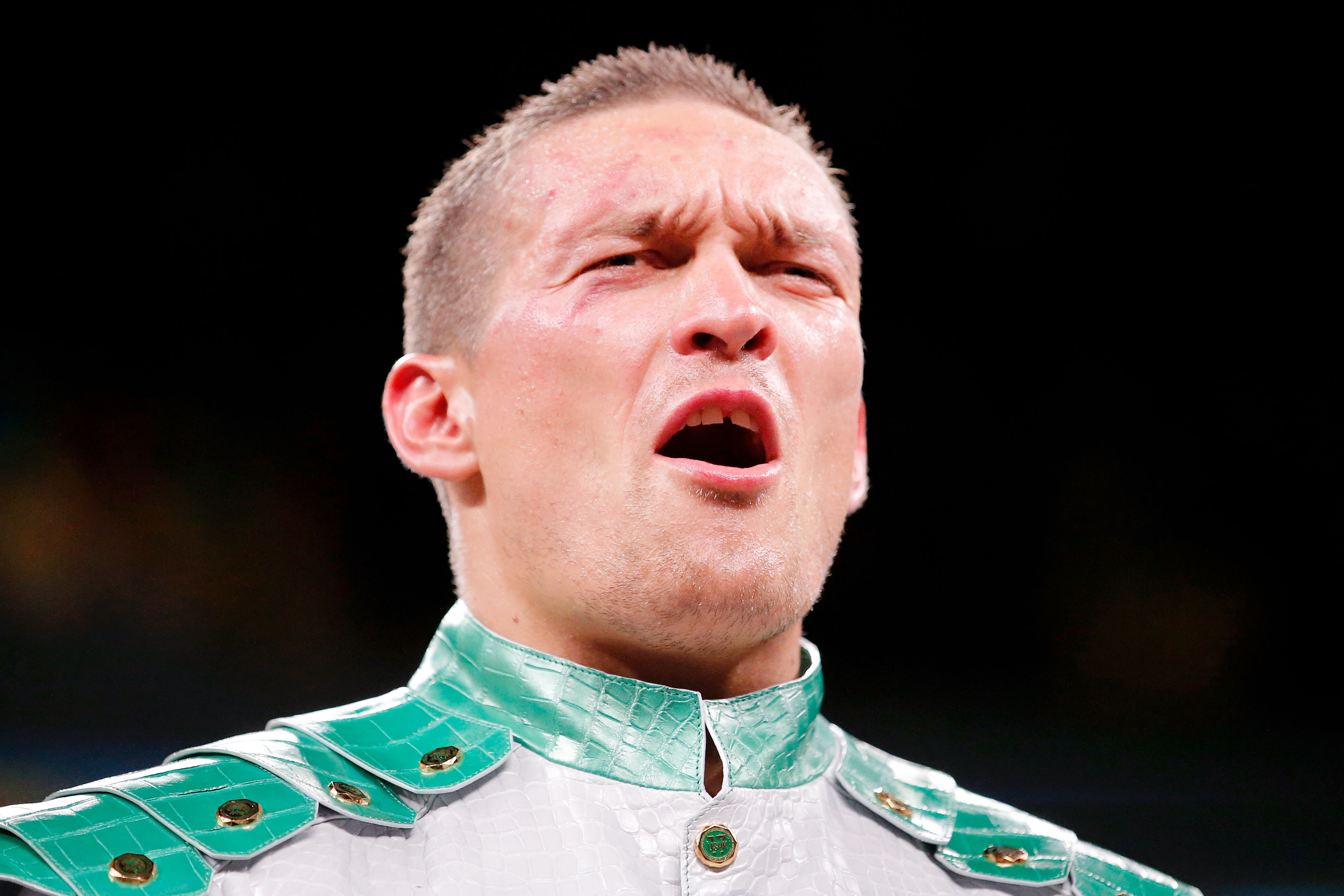
Take Oleksandr Usyk.
The former two-division undisputed world champion relinquished his world titles in June as he prepares for what could be the final fight of his legendary career. That immediately created another vacancy in the heavyweight division.
The WBC, one of boxing’s four major sanctioning bodies, subsequently elevated unbeaten heavyweight contender Agit Kabayel (27-0, 19 KOs) to world champion.
And look, I have nothing against Kabayel.
He’s a terrific fighter. He’s undefeated. He’s earned his position near the top of the heavyweight division.
But there’s something about calling someone a world champion when they didn’t actually win a world championship fight that doesn’t sit right with me.
And this isn’t some new phenomenon.
In fact, one of the most bizarre examples of this very practice involved a fighter who would go on to become one of the biggest names in the sport.
Devin Haney (33-0, 15 KOs), now a three-division world champion, became the full WBC lightweight champion in October 2019 without ever stepping into the ring to win the belt.
Haney was notified by email that he had become the WBC's lightweight champion after Vasiliy Lomachenko's team pushed for the Ukrainian star to be elevated to the newly created WBC “Franchise Champion” designation.
The Franchise Champion designation was essentially created for certain fighters based on their resume and prestige, while also allowing them to bypass mandatory obligations.
Read that again.
A champion could effectively be elevated into another championship designation and, in the process, avoid mandatory challengers.
In retrospect, it sounds completely insane.
And here's something that has always bothered me about the way this played out.
For years, fans mocked Haney as the “email champion.”
That nickname has followed him throughout his career, but it was never really fair.
Haney didn't ask to be given a championship through Gmail.
He wanted to fight Lomachenko.
He didn't create the Franchise Champion designation. He didn't ask the WBC to move Lomachenko into a new category. And he certainly didn't decide that the best way to determine its lightweight champion was to send Haney an email.
The sanctioning body made that decision.
Yet Haney was the one who became the punchline.
That's backwards.
If anything, Haney should have been furious that the fighter he wanted to fight was being given a special designation that allowed him to bypass the mandatory system while Haney was left holding a championship belt he hadn't actually won in the ring.
Thankfully, the Franchise Champion designation has largely disappeared from boxing and hasn't been seriously discussed in years.
Good.
Because that's exactly the kind of thing that makes boxing unnecessarily complicated.
Haney and Lomachenko eventually did fight, nearly four years later, with all four major 135-pound titles on the line in May 2023. Haney was awarded a unanimous decision victory, although there were plenty of people who believed Lomachenko had done enough to deserve the nod.
But I can’t help wondering what that fight would have looked like had it happened in 2019.
Lomachenko was still closer to his physical prime. Haney was still developing. And, most importantly, the fight was happening when fans actually wanted to see it.
Instead, boxing waited.
And waited.
And waited.
By the time they finally shared the ring, four years had passed.
Maybe Haney still wins. Maybe Lomachenko still loses. We’ll never know.
But waiting that long certainly didn't help.
And that is ultimately my problem with all of this.
The sport keeps finding ways to delay the fights fans actually want to see while simultaneously creating new ways to hand out championships.
It happens over and over again.
At some point, we have to ask ourselves what the word champion is supposed to mean.
Because if a championship can simply be handed to you when the previous champion vacates, are we really talking about a championship anymore?
Boxing already has a frustratingly low number of meaningful fights. The sport doesn’t need fewer of them.
It needs more.
Most fighters want to fight. Most hockey players want to play hockey. Most baseball players — unless your name happens to be Anthony Rendon — want to play baseball.
That’s the point.
Fighters want to fight.
So why are we constantly finding ways to make the process more complicated?
We already have four major sanctioning bodies. We have interim champions, regular champions, super champions, franchise champions, diamond champions and whatever other version of a belt someone has decided to create this week.
At some point, enough is enough.
My solution is actually pretty simple:
If you want to become a world champion, you should have to win a fight.
Crazy, right?
Let’s say Terence Crawford retires. Jaron “Boots” Ennis is the No. 1 contender in the IBF rankings. Great. Put Ennis in the ring with the next available contender and let them fight for the vacant championship.
Don’t just hand Ennis the belt.
Let him win it.
And yes, there are exceptions.
If Fighter A has already established himself as the mandatory challenger, won a final eliminator or otherwise earned the right to fight for the championship, forcing him to fight another bout simply because the champion vacated can be redundant.
There are legitimate reasons for allowing a sanctioning body to fill a vacant title without immediately staging another fight.
For one, money matters.
A world-title fight isn’t cheap. You’re talking about promoters, venues, officials, travel, insurance, sanctioning fees, fighter purses, broadcast costs and an entire undercard that has to be put together.
The WBC’s own published rules, for example, outline sanctioning fees as well as expenses related to belts, officials and insurance.
There’s also the issue of keeping a division moving. If a champion suddenly becomes unavailable, a sanctioning body doesn’t necessarily want a weight class sitting without a recognized champion for months while everyone waits for the situation to sort itself out.
I understand that.
Some fights genuinely are unnecessary.
But here’s where I start having a problem.
Since when are sanctioning bodies so concerned about saving everyone money?
These organizations are businesses. They make money from the very championships they oversee.
Mauricio Sulaiman, the WBC president, publicly criticized Crawford last year over the $300,000 sanctioning fee the organization said he owed following his unanimous decision victory over Canelo Alvarez.
So when the money is there, the sanctioning bodies certainly seem to know where to find it.
And that’s what makes this whole thing so frustrating.
If Fighter A and Fighter B were guaranteed to generate a massive payday by fighting for a vacant world championship, do we really believe the sanctioning body would be rushing to hand one of them the belt?
Of course not.
That’s the real issue.
The championship should be the reward for the fight — not the replacement for it.
Boxing doesn’t need more ways to manufacture champions.
It needs more reasons for champions to fight.
Because when the belts start being handed out without anyone having to step between the ropes, we’re not protecting the championship.
We’re cheapening it.
And if boxing wants fans to care about these belts, the sport has to give them a reason to believe they actually mean something.
So, yeah.
That’s what’s on my mind on this beautiful August day.
It’s good to be back.
Is it great to see you guys again.
Yes, everyone. It’s me. Ryan O’Hara. I’m back.
Well… sort of.
FightNights.com is undergoing a rebrand, and when the opportunity came to be a part of it again, I knew I couldn’t pass it up. It has been several years since I worked for this site, but I’d be lying if I said I ever forgot what it meant to me.
FightNights was a vital part of the journalist I became.
I’ve been fortunate enough to win awards, cover some of the biggest names and fights in boxing, and build a career that I’m incredibly proud of. But none of that changes where I came from. FightNights.com was part of that journey, and it would be incredibly selfish of me to forget it.
So, yes, I’m back.
And what better way to welcome myself back than with a little rant?
It’s a beautiful August day, and there is something that has been bothering me for quite some time.
Actually, it’s been bothering me for years.
We have reached a point in boxing where fighters are becoming world champions without having to win a fight for the privilege.
Think about that for a second.
In a sport where the entire premise is supposed to be simple — two fighters get into a ring, one wins, one loses — we somehow continue to find ways to hand out championships without anyone actually having to fight for them.
How did we get here?
And, more importantly, how is this helping boxing?
I’ve spent years criticizing the sanctioning bodies across multiple outlets. This isn’t going to be another 5,000-word rant about everything wrong with the WBC, WBA, IBF and WBO.
But as boxing continues to become increasingly difficult for casual fans to follow, I think it’s important that we at least acknowledge one of the biggest problems staring us directly in the face.
We have too many belts, too many champions and, increasingly, not enough fights.
Take Oleksandr Usyk.
The former two-division undisputed world champion relinquished his world titles in June as he prepares for what could be the final fight of his legendary career. That immediately created another vacancy in the heavyweight division.
The WBC, one of boxing’s four major sanctioning bodies, subsequently elevated unbeaten heavyweight contender Agit Kabayel (27-0, 19 KOs) to world champion.
And look, I have nothing against Kabayel.
He’s a terrific fighter. He’s undefeated. He’s earned his position near the top of the heavyweight division.
But there’s something about calling someone a world champion when they didn’t actually win a world championship fight that doesn’t sit right with me.
And this isn’t some new phenomenon.
In fact, one of the most bizarre examples of this very practice involved a fighter who would go on to become one of the biggest names in the sport.
Devin Haney (33-0, 15 KOs), now a three-division world champion, became the full WBC lightweight champion in October 2019 without ever stepping into the ring to win the belt.
Haney was notified by email that he had become the WBC's lightweight champion after Vasiliy Lomachenko's team pushed for the Ukrainian star to be elevated to the newly created WBC “Franchise Champion” designation.
The Franchise Champion designation was essentially created for certain fighters based on their resume and prestige, while also allowing them to bypass mandatory obligations.
Read that again.
A champion could effectively be elevated into another championship designation and, in the process, avoid mandatory challengers.
In retrospect, it sounds completely insane.
And here's something that has always bothered me about the way this played out.
For years, fans mocked Haney as the “email champion.”
That nickname has followed him throughout his career, but it was never really fair.
Haney didn't ask to be given a championship through Gmail.
He wanted to fight Lomachenko.
He didn't create the Franchise Champion designation. He didn't ask the WBC to move Lomachenko into a new category. And he certainly didn't decide that the best way to determine its lightweight champion was to send Haney an email.
The sanctioning body made that decision.
Yet Haney was the one who became the punchline.
That's backwards.
If anything, Haney should have been furious that the fighter he wanted to fight was being given a special designation that allowed him to bypass the mandatory system while Haney was left holding a championship belt he hadn't actually won in the ring.
Thankfully, the Franchise Champion designation has largely disappeared from boxing and hasn't been seriously discussed in years.
Good.
Because that's exactly the kind of thing that makes boxing unnecessarily complicated.
Haney and Lomachenko eventually did fight, nearly four years later, with all four major 135-pound titles on the line in May 2023. Haney was awarded a unanimous decision victory, although there were plenty of people who believed Lomachenko had done enough to deserve the nod.
But I can’t help wondering what that fight would have looked like had it happened in 2019.
Lomachenko was still closer to his physical prime. Haney was still developing. And, most importantly, the fight was happening when fans actually wanted to see it.
Instead, boxing waited.
And waited.
And waited.
By the time they finally shared the ring, four years had passed.
Maybe Haney still wins. Maybe Lomachenko still loses. We’ll never know.
But waiting that long certainly didn't help.
And that is ultimately my problem with all of this.
The sport keeps finding ways to delay the fights fans actually want to see while simultaneously creating new ways to hand out championships.
It happens over and over again.
At some point, we have to ask ourselves what the word champion is supposed to mean.
Because if a championship can simply be handed to you when the previous champion vacates, are we really talking about a championship anymore?
Boxing already has a frustratingly low number of meaningful fights. The sport doesn’t need fewer of them.
It needs more.
Most fighters want to fight. Most hockey players want to play hockey. Most baseball players — unless your name happens to be Anthony Rendon — want to play baseball.
That’s the point.
Fighters want to fight.
So why are we constantly finding ways to make the process more complicated?
We already have four major sanctioning bodies. We have interim champions, regular champions, super champions, franchise champions, diamond champions and whatever other version of a belt someone has decided to create this week.
At some point, enough is enough.
My solution is actually pretty simple:
If you want to become a world champion, you should have to win a fight.
Crazy, right?
Let’s say Terence Crawford retires. Jaron “Boots” Ennis is the No. 1 contender in the IBF rankings. Great. Put Ennis in the ring with the next available contender and let them fight for the vacant championship.
Don’t just hand Ennis the belt.
Let him win it.
And yes, there are exceptions.
If Fighter A has already established himself as the mandatory challenger, won a final eliminator or otherwise earned the right to fight for the championship, forcing him to fight another bout simply because the champion vacated can be redundant.
There are legitimate reasons for allowing a sanctioning body to fill a vacant title without immediately staging another fight.
For one, money matters.
A world-title fight isn’t cheap. You’re talking about promoters, venues, officials, travel, insurance, sanctioning fees, fighter purses, broadcast costs and an entire undercard that has to be put together.
The WBC’s own published rules, for example, outline sanctioning fees as well as expenses related to belts, officials and insurance.
There’s also the issue of keeping a division moving. If a champion suddenly becomes unavailable, a sanctioning body doesn’t necessarily want a weight class sitting without a recognized champion for months while everyone waits for the situation to sort itself out.
I understand that.
Some fights genuinely are unnecessary.
But here’s where I start having a problem.
Since when are sanctioning bodies so concerned about saving everyone money?
These organizations are businesses. They make money from the very championships they oversee.
Mauricio Sulaiman, the WBC president, publicly criticized Crawford last year over the $300,000 sanctioning fee the organization said he owed following his unanimous decision victory over Canelo Alvarez.
So when the money is there, the sanctioning bodies certainly seem to know where to find it.
And that’s what makes this whole thing so frustrating.
If Fighter A and Fighter B were guaranteed to generate a massive payday by fighting for a vacant world championship, do we really believe the sanctioning body would be rushing to hand one of them the belt?
Of course not.
That’s the real issue.
The championship should be the reward for the fight — not the replacement for it.
Boxing doesn’t need more ways to manufacture champions.
It needs more reasons for champions to fight.
Because when the belts start being handed out without anyone having to step between the ropes, we’re not protecting the championship.
We’re cheapening it.
And if boxing wants fans to care about these belts, the sport has to give them a reason to believe they actually mean something.
So, yeah.
That’s what’s on my mind on this beautiful August day.
It’s good to be back.