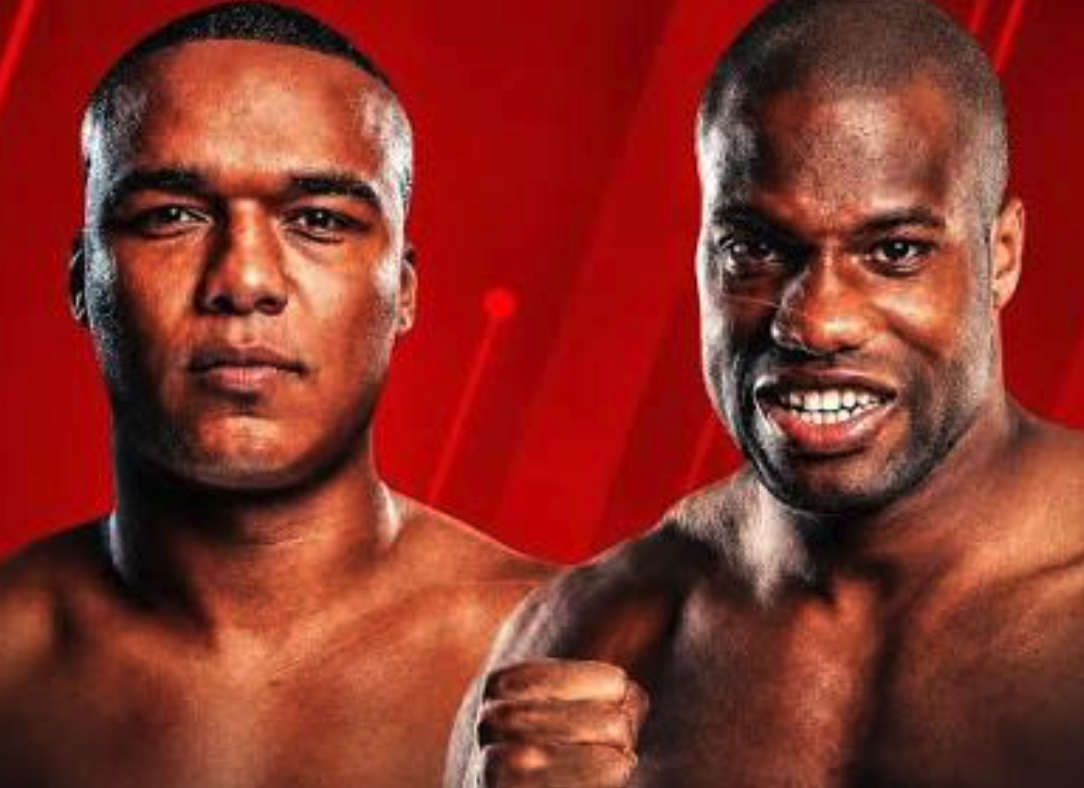
Dubois vs Wardley II Boxing Betting Odds Explained
Daniel Dubois and Fabio Wardley are heading back into one of the most volatile divisions in boxing with something more important than bragging rights at stake. Their rematch is scheduled for October 17, 2026 at The O2 Arena in London, with Dubois defending the WBO heavyweight title. FightNights currently lists the bout as one of the major fights on its upcoming schedule. The early market has Dubois installed as a significant favorite. At the time of writing, one U.S. odds comparison board showed a best displayed price around -385 on Dubois, +430 on Wardley and +2000 on the draw. Other books on the same board were offering considerably shorter prices, which is an immediate reminder that boxing odds are not universal numbers carved in stone. They move, and the sportsbook matters. For fight fans who also follow promotional offers around major cards, checking a current Shuffle bonus code feed can be more useful than relying on an old code copied from a forum or social post. FairGambling’s current Shuffle page specifically warns that bonus drops can expire or reach their claim limits quickly and that eligibility and wagering requirements vary. That same principle applies to boxing prices. A number without context can be misleading. Knowing what -385, +430 or a total such as 10.5 rounds actually means turns a betting board from a wall of numbers into something a fight fan can read. Dubois against Wardley is an especially useful fight for explaining it because the first meeting demonstrated exactly why a strong favorite is never the same thing as a guaranteed winner.
Why the Dubois Wardley Rematch Makes the Odds Interesting
The first fight on May 9 was anything but straightforward. Wardley dropped Dubois in the opening round and put him down again in the third. For a stretch, it appeared the champion might be able to force an early finish. Dubois survived, began steadily taking control and eventually stopped Wardley in the 11th round to claim the WBO title. FightNights described it as a dramatic heavyweight battle in which Dubois had to climb off the canvas twice before turning the fight around. The records going into the rematch reflect how dangerous both men have been. FightNights currently lists Dubois at 23-3 with 22 knockouts and Wardley at 20-1-1 with 19 knockouts. That level of finishing power matters because it creates more than a simple question of which boxer will win. Bettors can find markets involving a knockout, TKO, decision, total rounds, exact rounds and whether the contest reaches the final bell. Wardley also has a clear explanation for what went wrong the first time. At the September 2 launch press conference for the rematch, he said the early success made him too comfortable and too focused on landing another right hand rather than pressing his advantage intelligently. Dubois, meanwhile, described the first contest as a fight in which his team gradually chipped away at Wardley. That gives the second meeting a genuine tactical question. Does Dubois' late control in the first fight tell us more than Wardley's two early knockdowns? Or does Wardley have a realistic path to reversing the result if he manages those moments differently? Betting odds attempt to put a price on questions like those. They do not answer them.
How Boxing Betting Odds Work
At the simplest level, boxing betting odds tell you two things. First, they determine how much a successful wager can return. Second, they indicate the probability the market has effectively attached to an outcome once the sportsbook's margin is taken into account. The most common starting point is the moneyline. Instead of worrying about the winning round or whether the fight ends by KO, a bettor is simply selecting the fight outcome offered by that market. American odds use a plus sign or minus sign. A negative number identifies the favorite. If a boxer is -400, a $400 wager would produce $100 in profit if that boxer wins. You do not have to bet $400. A $100 bet at -400 would produce $25 profit, plus the original $100 stake back. Positive odds show how much profit a $100 wager would generate. A boxer at +300 would return $300 in profit on a winning $100 bet, plus the original $100 stake. That difference is why underdogs offer bigger potential payouts. The market considers the outcome less likely.
Breaking Down American Odds for Favorites and Underdogs
The Dubois-Wardley market gives us a live example. At the time of the final research check, the comparison board showed Dubois prices ranging from about -385 to -650 depending on the operator. Wardley ranged from approximately +300 to +430. The draw was priced much longer. That spread between sportsbooks matters. A person backing Wardley at +300 would make $300 profit from a winning $100 wager. At +430, that same $100 stake would make $430 profit. The boxer does not become more or less likely to win because one sportsbook offers a different number. The bettor is simply being offered a different price for taking the same underlying risk. Here is how some common American odds translate.
The probability figures are especially useful because they translate the price into a language boxing fans can understand. For negative American odds, implied probability can be calculated by dividing the absolute value of the odds by that number plus 100. For -400, that is: 400 ÷ 500 = 80% For positive odds, divide 100 by the odds plus 100. For +300: 100 ÷ 400 = 25% The sportsbook is not saying an outcome will happen. It is offering a price connected to an estimated probability, market conditions and its own margin.
What the Current Dubois Wardley Prices Actually Mean
Using the best prices displayed in the current comparison market provides another example. Dubois at -385 translates to an implied probability of about 79.4 percent. Wardley at +430 translates to about 18.9 percent. A +2000 draw represents roughly 4.8 percent. Add those figures together and they come to more than 100 percent. That extra amount is one way the bookmaker's margin appears in a market. It is also why reading implied probability should not be confused with discovering a pure prediction of the fight. There is another lesson in the Dubois price. A boxer being close to an 80 percent implied probability does not mean he wins eight rounds out of ten, nor does it mean bettors should expect an easy fight. The first meeting between these two is almost a textbook warning against reading a betting favorite as invulnerable. Dubois won, but only after being knocked down twice. Odds express a price on uncertainty. Boxing supplies plenty of it.
American Decimal and Fractional Odds
American odds dominate many U.S. sportsbooks, but the same market can be displayed in decimal or fractional format. The underlying bet has not changed.
Decimal odds include the returned stake in the displayed number. At 3.00, a $100 winning wager returns $300 total. Fractional odds show profit relative to the stake. At 3/1, every $1 risked produces $3 of profit if the wager wins. American odds communicate the same information in a different way. Positive numbers tell you the profit on a theoretical $100 stake. Negative numbers tell you how much would need to be risked to make $100 profit. Once that distinction becomes familiar, moving between formats is mostly arithmetic.
Beyond Winners and the Most Common Types of Boxing Bets
Boxing betting goes well beyond picking one fighter. For a rematch like Dubois-Wardley II, the first contest naturally creates questions about whether another stoppage is likely, whether Wardley can reproduce his early success and whether either man can make it through 12 rounds. Those possibilities create several common boxing markets.
The further a bettor moves from a simple moneyline into specific fight outcomes, the more conditions usually have to be correct. Predicting a fighter to win is one question. Predicting that the same fighter will win by knockout in exactly round seven is several predictions rolled into one. That is one reason exact-outcome and round betting prices tend to be longer.
Moneyline Boxing Wagers
A moneyline boxing bet is usually the cleanest market for someone learning how to bet on boxing. The bettor chooses the winner rather than the method. Depending on the sportsbook, a draw may be offered as a separate outcome. Other markets can operate under two-way rules where the treatment of a draw is different, so checking the house rules before placing a bet matters. For Dubois-Wardley II, the current market makes Dubois the favorite and Wardley the underdog. That does not mean most money has necessarily been bet on Dubois. Sportsbooks can adjust prices for many reasons, including their initial assessment, market movement, bettor action elsewhere and changing information around the fight. The sign only tells you how that selection is priced at that moment.
Method of Victory and Go the Distance Bets
Method-of-victory markets are particularly relevant in heavyweight boxing because one punch can completely change the fight. A sportsbook may offer selections such as: Dubois by KO, TKO or disqualification. Dubois by decision. Wardley by KO, TKO or disqualification. Wardley by decision. Draw. The exact grading language can differ between operators, especially in unusual outcomes such as technical decisions or disqualifications. The go-the-distance market is broader. Instead of choosing the winner, the bettor predicts whether the fight reaches the end of all scheduled rounds and requires the judges' scorecards. That is different from betting a particular boxer by decision. A fight can go the distance while the bettor's chosen fighter still loses on the cards.
Total Rounds and Over 10.5 Rounds
One of the most commonly misunderstood boxing markets is the total rounds bet. When a sportsbook posts Over 10.5 rounds, the “.5” does not mean the opening bell of round 11. For standard three-minute boxing rounds, half a round represents one minute and 30 seconds. DraftKings' published boxing guidance uses the same half-round convention, while sportsbook rules can differ on the exact treatment of a stoppage at precisely the halfway timestamp. In practical terms, a typical 10.5-round market looks like this: Under 10.5 generally requires the contest to end before the halfway point of round 11. Over 10.5 requires the contest to reach the sportsbook's qualifying point around 1:30 of round 11 or beyond. Because operator settlement rules can differ at the exact boundary, bettors should check the sportsbook's rules rather than assume every book grades an official stoppage at exactly 1:30 identically. The first Dubois-Wardley fight is a good reason to understand this distinction. It ended in the 11th round, but saying only “round 11” does not tell a total-rounds bettor everything needed to grade a 10.5 market. The official stoppage time matters.
Boxing Round Prop Bets
Round props ask for more precision. A bettor might select one fighter to win in a specific round or during a range such as rounds one through three. These markets can look attractive because they offer longer odds, but the price is longer for a reason. Suppose you believe Wardley's best opportunity is to recreate his explosive opening from the first fight. Betting Wardley simply to win allows that prediction to be correct whether he scores a first-round stoppage or wins a decision. Betting Wardley in rounds one through three requires both the fighter and the timing to be correct. That extra condition reduces the probability of winning the wager. The same logic applies to popular boxing prop bets involving knockdowns, total knockdowns, method of victory and whether a specific fighter is stopped.
Why Boxing Odds Move Before Fight Night
Opening odds are not final odds. A market can change from the moment sportsbooks release it until the fighters touch gloves. New information is one reason. An injury report, trainer change, difficult weight cut, replacement opponent or unusual weigh-in can alter how the market assesses a fight. Betting action can also move prices. If enough money comes in on one fighter, sportsbooks may adjust the odds. That can make the other side more attractive to new bettors and help the book manage its exposure. Competition between sportsbooks adds another layer. The Dubois-Wardley comparison already demonstrates this. One book can be substantially different from another on the same boxer at the same point in time. That is why asking “What are the odds?” often has no single answer. The better question is “What price is available right now?” For readers comparing promotions as well as fight markets, the same freshness rule is worth applying elsewhere. Fair Gambling tracks current gambling information, while its Shuffle coverage specifically distinguishes recently identified bonus drops from old codes that may already have expired or reached their claim limits.
How New Bettors Should Approach Boxing Odds
The safest way to understand boxing odds is to treat them as prices rather than predictions. A favorite can lose. An underdog offering a large payout is not automatically good value. A wager can win and still have been a poor decision if the bettor repeatedly accepts bad prices. Likewise, a well-researched wager can lose because boxing has enormous short-term variance. One punch, a cut, an injury, a point deduction or a close scorecard can change the result. A few habits matter more than trying to discover a secret betting system. Compare the same market across more than one sportsbook where legal and available. Understand exactly what has to happen for the wager to win. Convert the price into implied probability when deciding whether it makes sense. Separate your opinion of the boxer from your opinion of the odds. Set a fixed gambling budget before the fight rather than chasing losses during the card. No boxing betting strategy eliminates risk.
Live Boxing Betting and Changing Fight Momentum
Live betting adds another layer because the odds can change between rounds and sometimes during the action. Consider the first Dubois-Wardley fight. Wardley scored two early knockdowns. At that stage, a live market would naturally have looked very different from the pre-fight line. Dubois then recovered, increased his output and eventually stopped Wardley late. The sporting lesson is obvious. Momentum changes. The betting lesson is that a live price is still a price, not a guarantee that the current pattern will continue. Live boxing betting can also encourage rushed decisions because the bettor has less time to evaluate the number. Anyone using those markets should still decide in advance how much they are willing to risk during the full fight night.
How Are Boxing Odds Determined
Sportsbook oddsmakers begin with an assessment of how likely each outcome is. That can involve fighter records, quality of opposition, age, recent form, weight, reach, styles, punching power, defensive tendencies, previous meetings and other information. But those inputs are only the starting point. Once a market opens, sportsbooks can react to betting activity, price changes elsewhere and new information. Different operators may also reach different conclusions or accept different levels of risk. This is why the same boxer might be -385 at one sportsbook and -450 or -650 somewhere else. The boxer has not changed between browser tabs. The price has. For a bettor, that makes line comparison one of the few factors that can be controlled before placing a wager.
Does a Short Price Mean a Boxer Is Certain to Win
No. This is the most important point in any boxing betting guide. A -400 favorite has an implied probability of about 80 percent before adjusting for bookmaker margin. There is still meaningful uncertainty in that number. Heavyweight boxing makes that particularly easy to understand. Dubois was knocked down twice by Wardley in their first contest and still won by stoppage. Wardley was having success and still ended the night without the title. A line can express that one outcome is considered significantly more likely than another without making the favorite unbeatable. Anyone who cannot afford the possibility of losing the entire stake should not place the bet.
Betting Responsibly on Fight Night
Major boxing cards can make it easy to bet on several markets at once. There may be a moneyline, total rounds, method of victory, knockdown props, exact rounds, parlays and live markets available on the same fight. More markets do not make the outcome more predictable. Set a budget before the card starts and regard it as entertainment spending rather than money that has to be recovered. Avoid increasing stakes after losses, and do not treat a bonus or promotional offer as a reason to gamble more than planned. For U.S. readers who are concerned about their gambling or someone else's, the National Council on Problem Gambling provides support resources and access to the National Problem Gambling Helpline. NCPG currently lists 1-800-MY-RESET for call and text support.
Boxing Fight Odds FAQs
What do positive and negative signs mean in boxing betting odds?
Negative American odds identify the favorite and show how much would theoretically need to be wagered to make $100 profit. Positive odds identify the underdog and show how much profit a successful $100 wager would produce. A boxer at -200 would return $100 profit from a $200 stake, while +200 would return $200 profit from a $100 stake.
What does +200 or +700 mean in boxing odds?
At +200, a successful $100 wager produces $200 profit and returns $300 in total including the original stake. At +700, the same $100 wager produces $700 profit and an $800 total return. Higher positive odds reflect a lower implied probability.
How do you read boxing betting odds?
Start by identifying the favorite and underdog, then check the payout implied by the price. For American odds, a minus sign represents the favorite and a plus sign represents the underdog. Next, make sure you know which market you are viewing because a moneyline, method-of-victory bet and total-rounds bet can display similar numbers while requiring very different outcomes.
What are moneyline odds in boxing?
Moneyline odds price the outcome of the fight rather than a particular method or round. The bettor chooses the fighter expected to win, although some boxing moneylines also offer a draw as a separate selection. Always check the sportsbook rules for how draws are handled.
What does over 10.5 rounds mean in boxing betting?
A 10.5-round total refers to 10 completed rounds plus half of round 11. In a standard three-minute boxing round, the halfway point is 1 minute and 30 seconds. Sportsbook settlement rules can differ at the exact boundary, so bettors should verify the operator's rules before placing the wager.
What are prop bets in boxing?
Boxing prop bets focus on something more specific than simply choosing the winner. Common examples include method of victory, whether the fight goes the distance, exact winning round, round groups, knockdowns and total rounds. Because props require more specific predictions, many carry longer odds than the basic moneyline.
How are boxing odds determined?
Sportsbooks consider factors such as fighter ability, recent performances, matchup styles and available information before releasing an opening price. The market can then move because of new information, bettor action and price changes across competing sportsbooks. The final number is therefore a market price rather than a guaranteed prediction.
How do American decimal and fractional odds differ?
The formats express the same basic price differently. American odds use positive and negative numbers, decimal odds display the total return per unit wagered, and fractional odds show potential profit relative to the stake. For example, +200, 3.00 and 2/1 all represent approximately the same price.
What Fight Fans Should Remember
Dubois-Wardley II already has the ingredients of a heavyweight fight worth watching without a bet attached to it. The champion is returning against the man who dropped him twice. The challenger knows he created his opportunities in the first fight but failed to finish them. Dubois knows he absorbed Wardley's biggest early successes and still took control late. On October 17, those questions will be settled inside The O2. The betting board is trying to price them beforehand. Understanding the difference between those two things is the heart of having boxing betting odds explained properly. A moneyline tells you the market price on a winner. Round totals price how long the fight may last. Props narrow the prediction further. Plus and minus signs explain payout structures, while implied probability helps translate the numbers into something more meaningful. None of them remove uncertainty. That is precisely why the odds exist.