By Quitano Gonzalez
Wed, Aug 19 2026
How Boxing Let Its Biggest Fight Slip Away
For years, Tyson Fury and Anthony Joshua looked destined to headline the defining heavyweight fight of their era. Contracts have reportedly been signed and both men have come through recent outings, yet the anticipation feels different from the one boxing fans carried through the early 2020s. The biggest question now is whether the bout can happen with anything close to the sense of occasion it once promised.
Every generation of boxing supporters has one fight that grows beyond the belts at stake. It becomes the conversation that follows every title defense, every press conference and every unexpected result. For much of the past decade, Tyson Fury against Anthony Joshua occupied that space. It promised two British heavyweight champions, an undisputed crown and the kind of sporting event capable of stopping fans in their tracks wherever they happened to be.
Now, after years of twists, failed negotiations and changing fortunes, the contest appears closer than ever. Both boxers have also emerged victorious from recent warm-up bouts, clearing another obstacle on the road toward finally sharing a ring. For a fight that spent years hovering somewhere between possibility and frustration, getting this far is significant. Whether boxing waited too long is another matter.
Some rivalries are built through personal animosity. Others develop because two athletes keep winning until a collision becomes impossible to ignore. Fury and Joshua belonged firmly in the second category.
Joshua had become one of Britain's biggest sporting stars through Olympic success and world championship victories, while Fury returned from his remarkable comeback to reclaim heavyweight glory.
The fascination was in the contrast. Joshua carried the cleaner combinations and explosive power of an Olympic champion. Fury was the awkward 6-foot-9 heavyweight who could box at range, lean on opponents inside and somehow turn a press conference into an event of its own. For a time, both kept winning and Britain had two heavyweight champions whose careers seemed to be heading toward the same night.
If you followed heavyweight boxing during those years, chances are you assumed the fight would happen before either man experienced significant setbacks. Wembley Stadium felt like the natural stage. The undisputed heavyweight championship seemed destined to accompany it. Even American audiences, who traditionally gravitate toward domestic stars, understood why this represented one of boxing's biggest attractions.
Instead, every successful defense seemed to be followed by another conversation about timing rather than confirmation.
There was never a single moment when Fury against Joshua disappeared. The fight remained close enough to imagine, even as circumstances kept changing around it.
Deontay Wilder's successful arbitration claim forced Fury into a third meeting that many believed had already been left behind. Oleksandr Usyk then defeated Joshua twice, taking the belts and changing Joshua's place in the division just as another path appeared to be opening. Defeats, changing championship circumstances and fresh commercial opportunities gradually replaced the straightforward road that had once looked inevitable.
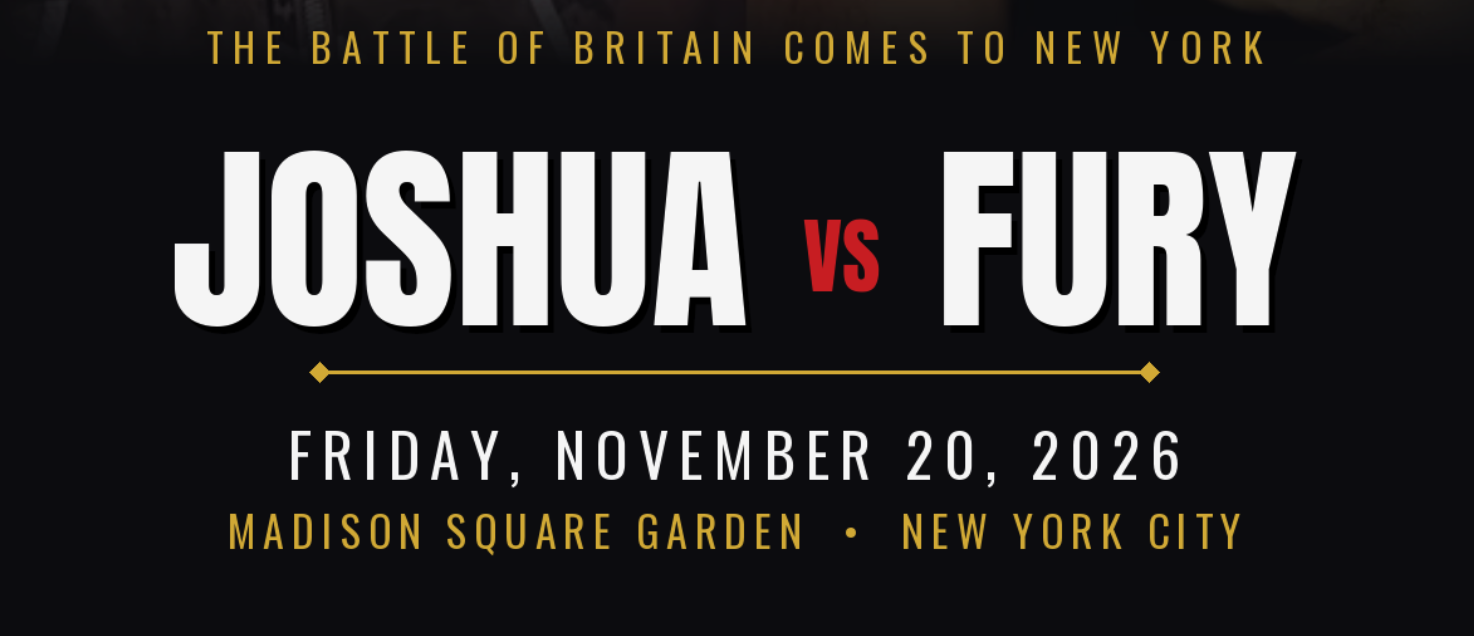
It took years for the pieces to come together again. By 2026, however, the conversation had moved beyond the familiar cycle of call-outs and speculation. Eddie Hearn said legally binding contracts were in place, leaving both men with one immediate job: come through their respective warm-up fights. Fury did so against Mariusz Wach in Thailand and Joshua followed with a stoppage of Kristian Prenga. With that hurdle cleared, attention has turned to where the fight will actually happen, with Madison Square Garden and Wembley reportedly among the leading possibilities.
The betting market also provides an interesting measure of how the matchup is viewed today. Fury is the clear favorite at -175, with Joshua the underdog at +150. Those numbers give Fury the advantage without presenting the contest as a foregone conclusion. For anyone looking beyond the headline prices, Sportsbook Review, an online resource covering sportsbooks, betting tools and industry news, has a guide for those looking to Read about the Stake bonus code for new users. It explains that Stake's current Canadian welcome offer is a 200% deposit match worth up to $4,200 CAD. The guide also details eligibility and the 40x playthrough requirement attached to the bonus, useful context to understand before considering the offer. Boxing is among the more than 33 sports covered by the Stake sportsbook.
For all the discussion about what might have been, it would be a mistake to assume Fury against Joshua has lost its ability to captivate a global audience. Boxing has seen this story before. Floyd Mayweather and Manny Pacquiao finally met in 2015 after years of speculation, long after many observers believed the ideal moment had passed. Amir Khan and Kell Brook also shared a ring later than supporters had hoped. Neither contest arrived under the same circumstances fans once imagined, yet both generated enormous attention because unanswered questions still carried value.
Fury and Joshua belong in that category. That curiosity doesn't disappear because careers have taken unexpected turns.
Commercially, the fight remains one of boxing's biggest attractions. Reports suggest each man could earn around $100 million, while Netflix is expected to broadcast the event to more than 325 million subscribers worldwide if plans remain unchanged. Whether the venue ends up being Wembley Stadium or Madison Square Garden, demand is unlikely to be an issue.
Perhaps that says as much about boxing supporters as it does the fighters themselves. Fans appreciate timing, but they also understand closure. Some rivalries deserve a final answer regardless of when the opportunity arrives.
The opening bell will still command the attention of millions. The path here has been far more complicated than anyone anticipated, yet Fury against Joshua remains the one heavyweight contest capable of reaching far beyond the sport itself. Boxing may wonder what this event could have looked like a few years earlier, but once the introductions begin and two familiar figures walk toward the center of the ring, that debate will finally give way to the only one that has ever truly mattered. Who leaves with the victory?
Every generation of boxing supporters has one fight that grows beyond the belts at stake. It becomes the conversation that follows every title defense, every press conference and every unexpected result. For much of the past decade, Tyson Fury against Anthony Joshua occupied that space. It promised two British heavyweight champions, an undisputed crown and the kind of sporting event capable of stopping fans in their tracks wherever they happened to be.
Now, after years of twists, failed negotiations and changing fortunes, the contest appears closer than ever. Both boxers have also emerged victorious from recent warm-up bouts, clearing another obstacle on the road toward finally sharing a ring. For a fight that spent years hovering somewhere between possibility and frustration, getting this far is significant. Whether boxing waited too long is another matter.
When Fury and Joshua Felt Like Boxing's Perfect Matchup
Some rivalries are built through personal animosity. Others develop because two athletes keep winning until a collision becomes impossible to ignore. Fury and Joshua belonged firmly in the second category.
Joshua had become one of Britain's biggest sporting stars through Olympic success and world championship victories, while Fury returned from his remarkable comeback to reclaim heavyweight glory.
The fascination was in the contrast. Joshua carried the cleaner combinations and explosive power of an Olympic champion. Fury was the awkward 6-foot-9 heavyweight who could box at range, lean on opponents inside and somehow turn a press conference into an event of its own. For a time, both kept winning and Britain had two heavyweight champions whose careers seemed to be heading toward the same night.
If you followed heavyweight boxing during those years, chances are you assumed the fight would happen before either man experienced significant setbacks. Wembley Stadium felt like the natural stage. The undisputed heavyweight championship seemed destined to accompany it. Even American audiences, who traditionally gravitate toward domestic stars, understood why this represented one of boxing's biggest attractions.
Instead, every successful defense seemed to be followed by another conversation about timing rather than confirmation.
Every Delay Changed the Story
There was never a single moment when Fury against Joshua disappeared. The fight remained close enough to imagine, even as circumstances kept changing around it.
Deontay Wilder's successful arbitration claim forced Fury into a third meeting that many believed had already been left behind. Oleksandr Usyk then defeated Joshua twice, taking the belts and changing Joshua's place in the division just as another path appeared to be opening. Defeats, changing championship circumstances and fresh commercial opportunities gradually replaced the straightforward road that had once looked inevitable.
It took years for the pieces to come together again. By 2026, however, the conversation had moved beyond the familiar cycle of call-outs and speculation. Eddie Hearn said legally binding contracts were in place, leaving both men with one immediate job: come through their respective warm-up fights. Fury did so against Mariusz Wach in Thailand and Joshua followed with a stoppage of Kristian Prenga. With that hurdle cleared, attention has turned to where the fight will actually happen, with Madison Square Garden and Wembley reportedly among the leading possibilities.
The betting market also provides an interesting measure of how the matchup is viewed today. Fury is the clear favorite at -175, with Joshua the underdog at +150. Those numbers give Fury the advantage without presenting the contest as a foregone conclusion. For anyone looking beyond the headline prices, Sportsbook Review, an online resource covering sportsbooks, betting tools and industry news, has a guide for those looking to Read about the Stake bonus code for new users. It explains that Stake's current Canadian welcome offer is a 200% deposit match worth up to $4,200 CAD. The guide also details eligibility and the 40x playthrough requirement attached to the bonus, useful context to understand before considering the offer. Boxing is among the more than 33 sports covered by the Stake sportsbook.
A Fight Can Lose Time Without Losing Its Appeal
For all the discussion about what might have been, it would be a mistake to assume Fury against Joshua has lost its ability to captivate a global audience. Boxing has seen this story before. Floyd Mayweather and Manny Pacquiao finally met in 2015 after years of speculation, long after many observers believed the ideal moment had passed. Amir Khan and Kell Brook also shared a ring later than supporters had hoped. Neither contest arrived under the same circumstances fans once imagined, yet both generated enormous attention because unanswered questions still carried value.
Fury and Joshua belong in that category. That curiosity doesn't disappear because careers have taken unexpected turns.
Commercially, the fight remains one of boxing's biggest attractions. Reports suggest each man could earn around $100 million, while Netflix is expected to broadcast the event to more than 325 million subscribers worldwide if plans remain unchanged. Whether the venue ends up being Wembley Stadium or Madison Square Garden, demand is unlikely to be an issue.
Perhaps that says as much about boxing supporters as it does the fighters themselves. Fans appreciate timing, but they also understand closure. Some rivalries deserve a final answer regardless of when the opportunity arrives.
The opening bell will still command the attention of millions. The path here has been far more complicated than anyone anticipated, yet Fury against Joshua remains the one heavyweight contest capable of reaching far beyond the sport itself. Boxing may wonder what this event could have looked like a few years earlier, but once the introductions begin and two familiar figures walk toward the center of the ring, that debate will finally give way to the only one that has ever truly mattered. Who leaves with the victory?