By Gabriel J Gonzalez
Fri, Nov 13 2026
MVP07 Knew How To Entertain: Can They Make Women's Boxing Rise?
After spending a weekend in Arlington, Texas, I walked away with something I haven't felt about boxing in a long time: optimism. It's been years since I've attended a decent scaled boxing event. One that includes press conferences, weigh-ins, open workouts, and everything else that comes with a major fight week.
To be truthful, these events rarely live up to the hype. These days, it's easier to cover everything from home. Social media provides nearly every piece of information you need, and you can follow an entire fight week without ever leaving your couch. And here's another hard truth. Boxing isn't what it used to be. It’s been tough to keep interest in a sport that has no structure, and most of the boxing calendar is made of mismatches throughout the year. Men's boxing, in particular, has become a frustrating mess of promotional disputes, fights that never happen, and fighters seemingly more interested in protecting their records than proving they're the best. Now it’s mixed in with fighters who think they are more valuable than they actually are.
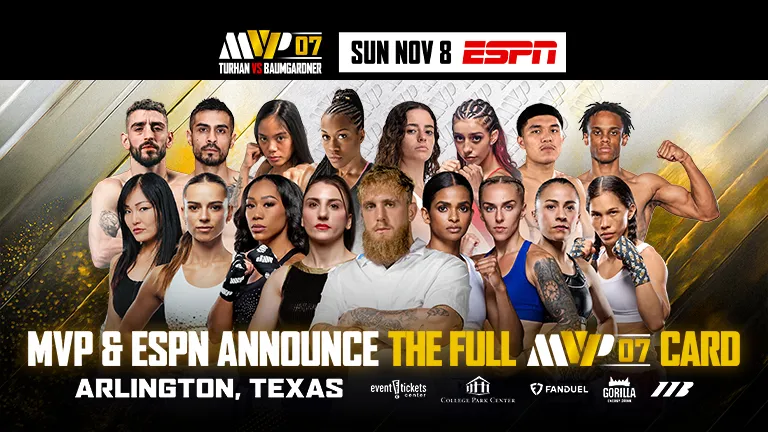
But Most Valuable Promotions (MVP) has something different happening. The company is making a significant investment in women's boxing, and from what I witnessed this past weekend, there might actually be something special developing. Fighters who actually just want to get in there to fight, win a title, and understand that the money for the most part, has to be earned by fighting and winning titles.
I traveled to Arlington, Texas, this past weekend to attend MVP07. I wasn't there in any official capacity as a writer for fightnights.com. I had a different reason for being there than covering a fight. I planned on doing what I normally do every week: writing about the winners, losers, and results from the weekend.
I stayed at the same hotel as the fighters and their teams. I'll admit, pulling up and seeing four Cadillac Escalades parked outside was a little surprising. The vehicles, along with a small Mercedes bus, were being used to transport fighters and their teams throughout the weekend. Inside the hotel, everyone was just hanging out throughout the days and nights. Fighters, trainers, MVP employees, and entire teams were scattered throughout the property. Everyone seemed approachable. Everyone was friendly. Keep in mind, I was a complete stranger to most of these people. Nobody knew I wrote for a boxing website, and I wasn't walking around with a media credential trying to get interviews. I was simply another person attending the event. And that made the experience even more interesting.
MVP is still a relatively new promotional company, and finding success as a boxing promoter is incredibly difficult. The sport has a long history of promoters coming and going, with very few managing to build something sustainable. What stood out to me was how MVP operated. Their crew seemed young, energetic, and genuinely interested in making the experience enjoyable for everyone involved. I spoke with several teams who praised how they were being treated. MVP was taking care of them, and they appreciated it.
I also had a few interactions with MVP employees, all of whom were professional and friendly. Even complaints that seemed rather ridiculous were taken seriously. Employees remained respectful and handled situations like experienced customer service representatives.That might not sound like a big deal but it is. Now, I wasn’t behind the scenes so don’t take that part as gold.
Another thing MVP seemed to understand was how to market its events. Most of the fight week activities were held at Texas Live!, an entertainment complex that attracts a younger crowd and provides a much different atmosphere than your typical hotel ballroom weigh-in. Saturday night's weigh-in was a perfect example. There were easily a thousand people watching, although many weren't necessarily there for boxing. Kanye West was performing across the street at AT&T Stadium, bringing thousands of people into the surrounding entertainment district. And MVP took advantage of it. People who likely couldn't name a single fighter on the card were watching the weigh-ins, cheering, and getting caught up in the atmosphere. They were enjoying it.
Maybe a few of those people tuned in the following night. Maybe some became fans of a fighter they had never heard of before. That's how you grow a sport. Instead of relying entirely on an existing boxing audience, MVP was putting its product in front of people who might otherwise never pay attention. It was a smart strategy, or coincidence.
Sunday night's event was equally enjoyable. The venue was relatively small, and while it wasn't sold out, there was a respectable crowd. Ticket sales appeared decent, and the atmosphere was good throughout the night. For the most part, the matchmaking was excellent. The fights were entertaining, the action moved quickly, and there wasn't an unnecessary amount of downtime between bouts. One fight ended, and the next one got underway. Simple, right? Unfortunately, that's something boxing has managed to complicate over the years. We've all sat through events where it feels like an eternity passes between fights. MVP kept things moving, and it made the entire experience better. As for the judging? Well, I'm not going to blame MVP for that disaster. I've already written about the problems with boxing judges, particularly in Texas. It's one of the many reasons the sport continues to frustrate its own fans. But outside of that, the event itself was well done. The Co-Main Event and Main Event had the crowd on the edge of their seats. Most of the fighters were entertaining.
This brings me to what I believe is the most interesting part of MVP's business model. Women's boxing. MVP is investing heavily in the women's side of the sport, and I believe there's an opportunity here that simply doesn't exist in men's boxing. Men's boxing has decades of established promotional companies, television relationships, competing interests, big egos, and fighters spread across different organizations. They also probably have fifty times as many fighters as women boxers. It's nearly impossible for one company to bring everyone together. Women's boxing is different. It's a smaller market. There are fewer established stars, fewer promotional barriers, and a much greater opportunity for one company to build something organized.
If MVP can sign a significant percentage of the best female fighters in the world, along with the next generation of rising prospects, it can create something men's boxing has struggled to deliver for decades. A system where the best consistently fight the best. Imagine organized tournaments, competitive rankings, recurring events, and fighters building recognizable rivalries. Imagine a promotional structure where fans actually know who the top fighters are and when they're going to fight. Even fighters who aren't signed to MVP could participate through agreements with other promoters.The possibilities are there. And unlike men's boxing, where changing the existing structure seems nearly impossible, women's boxing has an opportunity to build that structure while the sport is still growing.
I only attended one MVP event, so I'm certainly not pretending to know everything happening behind the scenes. But I'll tell you what. I see it.I see the potential for women's boxing to become something much bigger than it is today. I see what appears to be a vision MVP is trying to turn into reality. And I'm a fan of it.
Of course, there's one major question that still needs to be answered. Will it work? Can MVP turn women's boxing into a marketable, sustainable sport? Can it eventually build an audience comparable to what women's basketball or women's tennis has achieved?
That's where things get complicated. I don't know what the purses were for Sunday night's event. I don't know the financial details of MVP's broadcasting arrangements with ESPN, or what other television and streaming deals the company might be working on. I also don't know how much money MVP is investing compared to what it's bringing in. And those numbers matter. At the end of the day, this is a business for Jake Paul and his partners. No matter how much passion or enthusiasm they have for women's boxing, the business eventually needs to make financial sense.
You can put on great events, treat fighters exceptionally well, and produce an entertaining product, but if the revenue isn't there, sustaining that investment becomes difficult. Katie Taylor and Amanda Serrano helped demonstrate just how successful women's boxing can be. Their trilogy brought enormous attention to the sport, and those fights helped create the foundation for what MVP is trying to build today. But Taylor and Serrano were special. Their rivalry had the personalities, history, competitiveness, and storylines that made people want to watch. Recreating that kind of success isn't going to be easy. And that's the challenge. The Taylor-Serrano trilogy shouldn't be the finish line. It should be the starting point. MVP now needs to develop new stars, create new rivalries, and give fans reasons to keep watching long after Taylor and Serrano are gone. That's a much more difficult task than promoting one major fight. I've been involved in boxing for nearly 30 years. I've watched the sport change, and not always for the better. I've seen great fights fall apart, talented fighters waste years of their careers, and the politics of boxing repeatedly get in the way of what should matter most.
That's why this weekend stood out to me. It wasn't because MVP put on the greatest boxing event I've ever attended. It wasn't because the venue was packed or because every fight was unforgettable. It was the little things. The organization. The atmosphere. The way the fighters and teams were treated. The effort to reach new fans. The possibility that someone is attempting to build something with an actual long-term vision. Also, the most important part of all, the fights were fun to watch.
There's still a long road ahead. MVP will need to prove it can turn that vision into a sustainable business, develop recognizable stars, and convince audiences to consistently support women's boxing. But after spending the weekend in Arlington, I believe they have a legitimate shot. For a sport that has given me plenty of reasons to be frustrated over the years, it was refreshing to walk away from an event feeling optimistic (other than the judging).
MVP is on the right path but only time will tell if it will actually work.